Email Marketing in 2026: How to Write Subject Lines That Get Opened
Your emails are landing in the inbox. Nobody's opening them. The problem is almost always the subject line — and fixing it is easier than you think.
The Brutal Reality of Open Rates
Let's start with the uncomfortable truth. The average email open rate across all industries is about 21%. That means for every 100 people on your list, 79 of them see your subject line and think "nah." Your email could contain the secret to eternal youth, and four out of five people will never know because they didn't bother clicking.
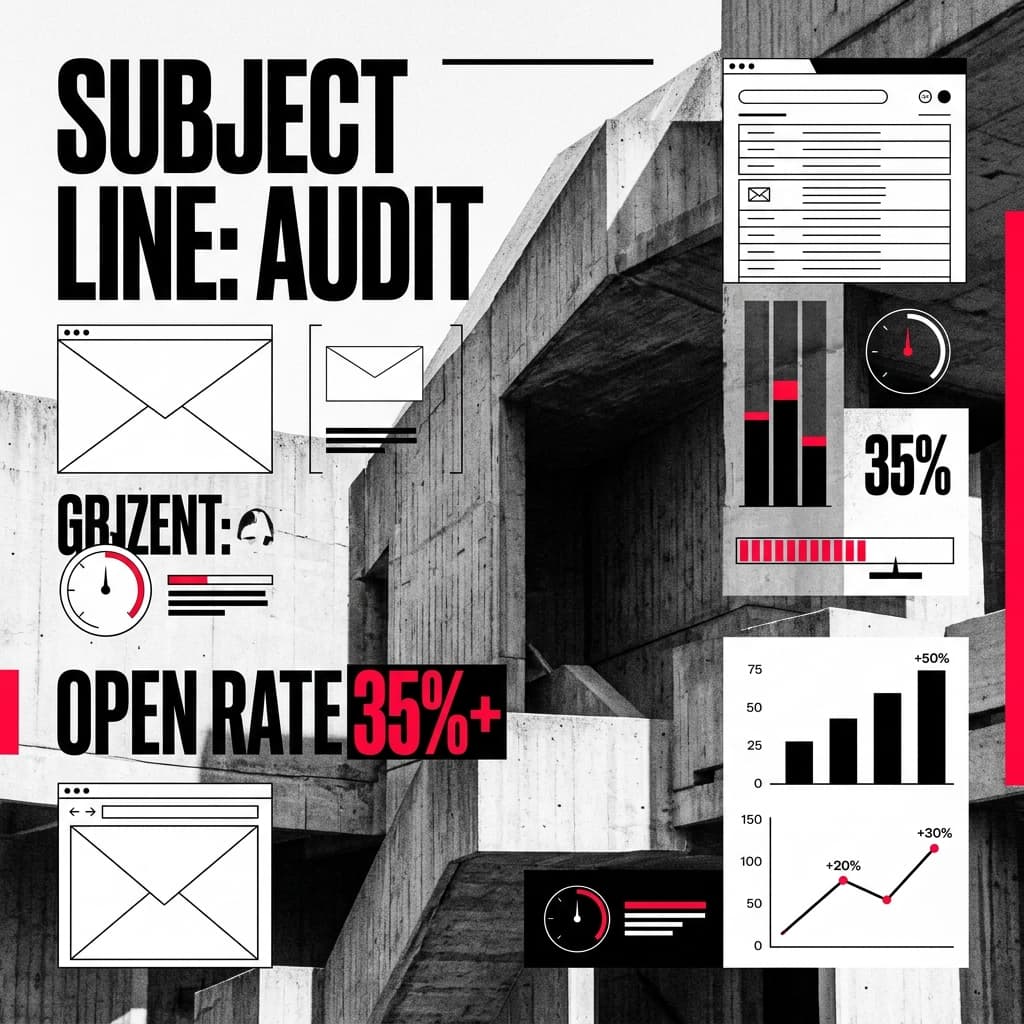
Now, the good news: open rates vary wildly. Government emails average about 29%. Retail sits around 17%. Nonprofits hit 27%. But within every industry, some senders consistently crush it with 35%+ open rates while their competitors languish at 15%. The difference almost always comes down to one thing: the subject line.
You've got about 40 characters (roughly 7 words) to make the case for why someone should interrupt their day to read your email. That's it. Let's talk about how to make those 7 words count.
The Psychology Behind the Click
People open emails for one of four reasons. Every good subject line taps into at least one of them:
- Curiosity: "We analyzed 10,000 landing pages. Here's what we found." The reader's brain can't rest until it knows the answer. This is called the "information gap" — you've shown them there's something to know, and now they need to know it.
- Self-interest: "Your website is losing $500/day. Here's the fix." When the subject line is directly relevant to their pain point or goal, clicking feels like an obligation, not a choice.
- Urgency/scarcity: "48 hours left: 40% off everything." FOMO is real. When something has a deadline or limited availability, people act faster. But — and this is critical — fake urgency destroys trust. If the sale is always "ending soon," your audience will stop believing you.
- Social proof: "Why 50,000 marketers switched to this tool." If a lot of other people are doing something, it signals that it's safe and valuable. Numbers add credibility.
Power Words That Boost Open Rates
Certain words consistently outperform others in subject lines. Here's what the data shows:
Words that increase opens: "you," "free," "new," "how," "tips," "quick," "mistakes," "secret," and "finally." These words either promise value or create curiosity — usually both.
Words that decrease opens: "newsletter," "update," "monthly," "digest," and "announcement." These words signal routine, and routine is boring. Nobody wakes up excited to read a "monthly digest."
Also, don't be afraid to use numbers. "5 mistakes killing your conversion rate" will outperform "Mistakes killing your conversion rate" almost every time. Numbers set expectations and make the promise feel concrete and achievable.
Personalization That Goes Beyond "Hey {FirstName}"
Personalized subject lines get 26% higher open rates on average. But sticking someone's first name at the beginning isn't really personalization anymore — it's 2020-era table stakes, and most people see right through it.
Real personalization means segmenting your list and tailoring your subject line to what that specific group cares about. Here are a few approaches:
- Behavioral triggers: "You left something in your cart" works because it references a specific action the person took. That's true personalization.
- Purchase history: "Your favorite product just got restocked" — relevant, timely, and specific to the individual.
- Location-based: "New events in Chicago this weekend" — geographic relevance increases open rates by up to 29%.
- Engagement-based: "We miss you — here's 20% off to come back" — re-engagement emails that acknowledge the subscriber's absence feel genuinely personal.
If you're writing dozens of segmented subject lines, use Inktivate's Paraphrasing Tool to quickly generate variations. Write one strong subject line, then create 4–5 versions tailored to different segments without starting from scratch each time.
A/B Testing: How the Pros Do It
Guessing which subject line will work best is a fool's game. The only reliable method is to test.
Here's a simple A/B testing framework that works:
- Test one variable at a time. If you change the wording AND the emoji AND the length, you won't know which change made the difference. Change one thing per test.
- Use a meaningful sample size. Testing on 50 subscribers tells you nothing. You need at least 1,000 per variant to get statistically significant results.
- Send to the test group first, then the winner to everyone. Most email platforms (Mailchimp, ConvertKit, ActiveCampaign) let you send variant A to 15% of your list, variant B to another 15%, wait 2–4 hours, and then automatically send the winning subject line to the remaining 70%.
- Track opens AND clicks. A subject line might get opened out of curiosity but lead to zero clicks. The best subject lines attract people who are actually interested in the content, not just curious clickers.
Mobile Preview Optimization
Over 60% of emails are now opened on mobile devices. And on mobile, your subject line gets brutally truncated. Most phones show only 30–35 characters in the inbox preview. If your most important words are at the end, they're invisible.
This means your subject line needs to front-load the value. Compare these two:
- "Our comprehensive guide to improving your email open rates in 2026" — On mobile, they see: "Our comprehensive guide to improv..."
- "Boost open rates: The 2026 playbook" — On mobile, they see the whole thing. It's punchy, clear, and complete.
Also, don't forget about preview text (the grey text that appears after the subject line in most email clients). Most senders leave this as "View this email in your browser" or the first line of their email body. That's wasted space. Write a custom preview text that complements and reinforces your subject line. Think of it as your subject line's wingman.
Spam Trigger Words to Avoid
Even if your email is totally legitimate, certain words can land you in the spam folder — or at least lower your sender reputation over time. Here are the ones to watch out for:
- Money-related: "$$," "cash bonus," "earn money fast," "double your income"
- Pressure-related: "Act now," "limited time," "don't miss out" (when used excessively)
- Deceptive-related: "Re:" or "Fwd:" when it's not a reply or forward, "You've been selected," "Congratulations!"
- ALL CAPS: Never. Just never. "FREE SHIPPING TODAY ONLY" is the fastest way to get flagged.
A good test: read your subject line and ask yourself, "Would I roll my eyes if I saw this in my inbox?" If yes, rewrite it.
Putting It All Together
Here's the workflow for writing a subject line that performs:
Start with the value proposition — what does the reader get? Then apply one psychological trigger (curiosity, urgency, social proof, or self-interest). Keep it under 40 characters. Front-load the key words. Write 5–10 versions. Use Inktivate's Content Idea Generator to brainstorm angles you might not have considered. A/B test the top two. Analyze the results. Repeat next week.
Email marketing isn't dying. But lazy email marketing is. The brands that obsess over their subject lines — treating each one as a tiny piece of advertising — are the ones building lists that actually generate revenue. Seven words. Make them count.